
Related Articles
- From Philanthropy to Profits: How Social Impact Investing is Reshaping the Future of Capital Markets
- Lost in Translation: How Language Barriers Shape Global Banking Relationships and Client Interactions
- Regulatory Labyrinths: Examining the Unanticipated Effects of Financial Laws on Sustainable Fashion Markets
- The Hidden Connection Between Gamification and Banking: How Playful Finance Engages a New Generation of Savers
- Borrowing Blues: How Your Zip Code Can Affect Loan Access and Financial Flexibility in Suburban vs Urban Areas
- Exploring the Quiet Revolution: How Biometric Privacy is Transforming User Trust in Digital Banking
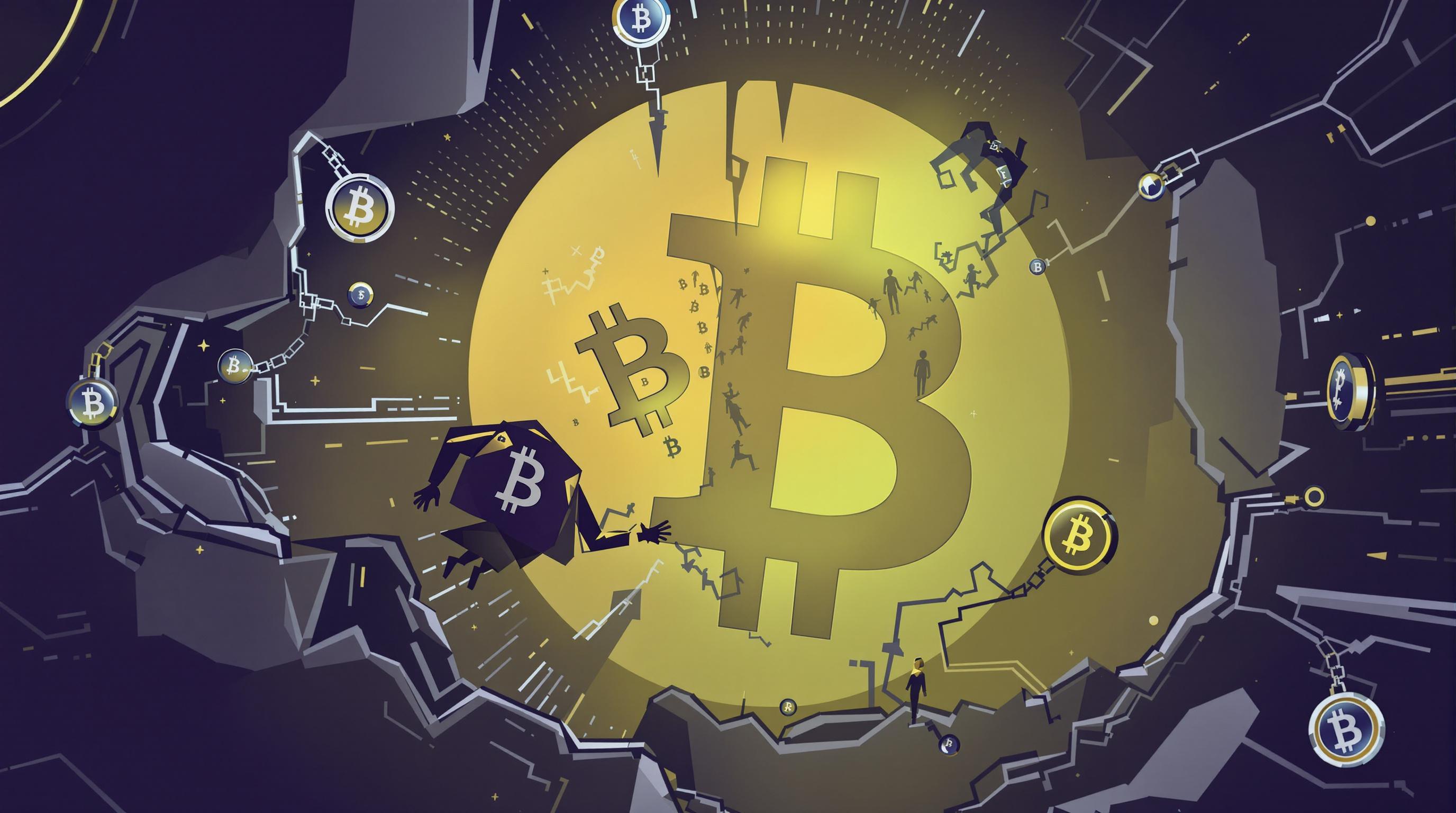
Navigating the Shadows: The Role of Cryptocurrencies in Traditional Financing Frameworks
Navigating the Shadows: The Role of Cryptocurrencies in Traditional Financing Frameworks
Cryptocurrencies have emerged as a disruptive force in traditional financing frameworks, grappling with the complexities of regulation, trust, and technology. In this article, we explore their multifaceted role, the interplay with existing financial systems, and where we might be headed in this uncharted financial territory.
The Rise of Cryptocurrencies: A Brief Overview
Imagine a world where money is no longer limited to banks and government regulations. That’s exactly what cryptocurrencies like Bitcoin and Ethereum promise—financial transactions that occur without the need for a central authority.
Launched in 2009, Bitcoin garnered attention as the first decentralized cryptocurrency, fueled by blockchain technology. Since then, the market has exploded: as of October 2023, the total market cap of cryptocurrencies was over $2.5 trillion, according to CoinMarketCap. This growth signifies not just a possible alternative to traditional finance but also a challenge to existing systems.
What Makes Crypto So Enticing?
Four words: decentralization, transparency, accessibility, and innovation. These characteristics have made cryptocurrencies increasingly popular across various demographics. Today, over 200 million people are believed to hold cryptocurrencies globally, with significant growth observed among those aged 18-34, as indicated by a report from Statista.
Decentralization: A Double-Edged Sword
Decentralization is a foundational principle of most cryptocurrencies. Instead of a central body controlling the money supply, transactions are verified by a network of nodes, making it less susceptible to manipulation. However, this also means there's no safety net. If you lose your private key, that's it; your funds are gone! It's like losing the keys to your house—except there’s no locksmith to call.
Blockchain Technology: A Game-Changer
Blockchain technology underpins cryptocurrencies, providing a secure, transparent, and tamper-proof ledger for all transactions. This technology is not just a financial tool; it has myriad applications—from supply chain management to voting systems. For instance, IBM's Food Trust blockchain allows companies to trace the journey of food products from farm to table, enhancing transparency and trust in the food supply chain.
The Dance with Traditional Finance
As cryptocurrencies have grown, so have their interactions with traditional financial systems. Many banks now look at digital currencies as both a threat and an opportunity. The relationship can be likened to a tango: sometimes partners, sometimes rivals. A Bloomberg report in 2023 noted that institutions like J.P. Morgan and Goldman Sachs are developing crypto services to remain competitive in a rapidly evolving market.
Case Study: J.P. Morgan's Blockchain Initiative
In 2021, J.P. Morgan launched its own crypto network, Onyx, designed to streamline interbank payments. This was a significant move, illustrating that even traditional banks recognize the potential of blockchain technology. J.P. Morgan reported that their blockchain network was capable of handling over $300 billion in transactions in its first year alone. Talk about cashing in!
Challenges: Can We Trust Crypto?
Trust is fundamental in finance—be it in banks or cryptocurrencies. The lack of regulation and the prevalence of scams create significant challenges. According to a report by Chainalysis in 2021, illicit crypto transactions amounted to $14 billion, raising eyebrows and questions regarding the legitimacy of the entire industry.
Why It’s Time to Pay Attention
For many, cryptocurrencies are seen as speculative investments, but their potential to transform the lending landscape is undeniable. Decentralized Finance (DeFi), a burgeoning sector encompassing alternate financial products and services, relies deeply on cryptocurrencies to operate outside of traditional systems. In 2023, the total value locked in DeFi protocols exceeded $100 billion, showing rapid adoption.
A Story from the Blockchain
Meet Sarah, a 24-year-old entrepreneur. Tired of conventional bank loans with their red tape and lengthy approval processes, she turned to a DeFi platform to secure a quick loan for her start-up. Within minutes, she obtained the funds required, thanks to smart contracts that ensured she met specific conditions without the need for a human intermediary.
Is This the Future?
With advancements in technology, are we barreling towards a complete overhaul of the financial landscape? Absolutely—and it’s time for traditional finance to adapt or get left behind. In lieu of a conservative approach, banks must engage with these platforms to better serve consumers.
The Lure of Accessibility
Take a moment to ponder: how many people in the world are unbanked? As of 2021, nearly 1.7 billion adults did not have access to traditional banking systems according to the World Bank. Cryptocurrency offers a solution, enabling access to financial services via smartphones and the internet. This newfound financial inclusion can bring about significant socio-economic change.
How Regulation Fits Into the Picture
But hold your horses—where does regulation come into play? As cryptocurrencies worldwide become more popular, governments are eagerly trying to find an appropriate framework. Whenever a new financial paradigm emerges, regulation always seems to follow. The U.S. Treasury Department has already started laying the groundwork for digital coin regulations that would ensure transparency and security.
The Helix Effect: Cryptocurrencies Begetting Innovation
In the friction between traditional finance and cryptocurrencies, one more interesting development is innovation. The arrival of cryptocurrencies has stimulated new technological solutions like Security Token Offerings (STOs) and Initial Coin Offerings (ICOs), reshaping how companies raise capital. According to PwC, the global ICO volume hit $12 billion in 2022, indicating a transformed fundraising landscape.
Persuasion: Why You Should Explore Cryptocurrencies
Wouldn't it be a bit boring to rely solely on the status quo? Embracing cryptocurrencies can introduce diversification into your investment portfolio. By dipping your toes into this evolving market, you can hedge against fiat currency risks. As legendary investor Warren Buffett once said, “Diversification is protection against ignorance.”
A Cautionary Note About Volatility
However, a word of caution here—cryptocurrencies can be extremely volatile. For instance, in 2021, Bitcoin soared to nearly $65,000 before plummeting to around $30,000 just months later. This volatility can be both a risk and an opportunity, often summarized as taking a rollercoaster ride with your wallet!
The Future: Are We Ready for It?
As we look towards the future, can cryptocurrencies coexist harmoniously with traditional finance, or will we witness a complete upheaval of current systems? It seems likely we’ll find a middle ground—integrating decentralized solutions while upholding the necessary structures of traditional finance.
Final Thoughts
Everyone has a role to play in this evolving narrative. As innovators, regulators, users, and custodians of trust converge, our understanding of finance will change. So whether you’re a seasoned investor or just starting to dip your toes in the crypto waters, challenge yourself to navigate these shadows and learn what tomorrow may hold for the world of finance.
In the end, while cryptocurrencies are certainly intriguing, they should be approached with curiosity and caution. Remember, the world of finance is like a vast ocean—exciting but deep, with unknown currents lurking beneath. Happy sailing!
Read More